

What are the noise levels of a Full - tab Battery Assembly Line?
As a supplier of the Full-tab Battery Assembly Line, I've had numerous inquiries about the noise levels associated with this advanced piece of machinery. Understanding the noise levels is crucial not only for the well - being of the workers but also for compliance with environmental and workplace regulations.
Sources of Noise in a Full - tab Battery Assembly Line
A full - tab battery assembly line consists of several key components, each contributing to the overall noise generation. The first major source is the mechanical movement of the conveyor belts. These belts are responsible for transporting battery components from one station to another. The friction between the belts and the rollers, as well as the movement of the heavy battery parts on the belts, creates a continuous, low - frequency rumbling sound.
Another significant source is the stamping and cutting processes. In the full - tab battery assembly, precise stamping and cutting of battery tabs are required. The high - speed impact of the stamping tools on the metal sheets generates sharp, high - pitched noises. These noises can be quite intense, especially when the stamping frequency is high.
The welding operations also contribute to the noise levels. Laser welding, which is commonly used in full - tab battery assembly, produces a series of short, sharp noises as the laser beam interacts with the battery materials. Ultrasonic welding, on the other hand, generates a high - frequency buzzing sound.
The operation of motors and pumps is another factor. Motors are used to power various moving parts of the assembly line, such as robotic arms and conveyor drives. The rotation of the motor shafts and the vibration of the motor casings produce a constant humming noise. Pumps, which are used for fluid transfer and cooling systems, also add to the overall noise with their mechanical operation.
Measuring Noise Levels
To accurately assess the noise levels of a full - tab battery assembly line, we use sound level meters. These devices are calibrated to measure the intensity of sound in decibels (dB). We typically take measurements at different locations along the assembly line, including near the stamping stations, welding areas, and conveyor belts.

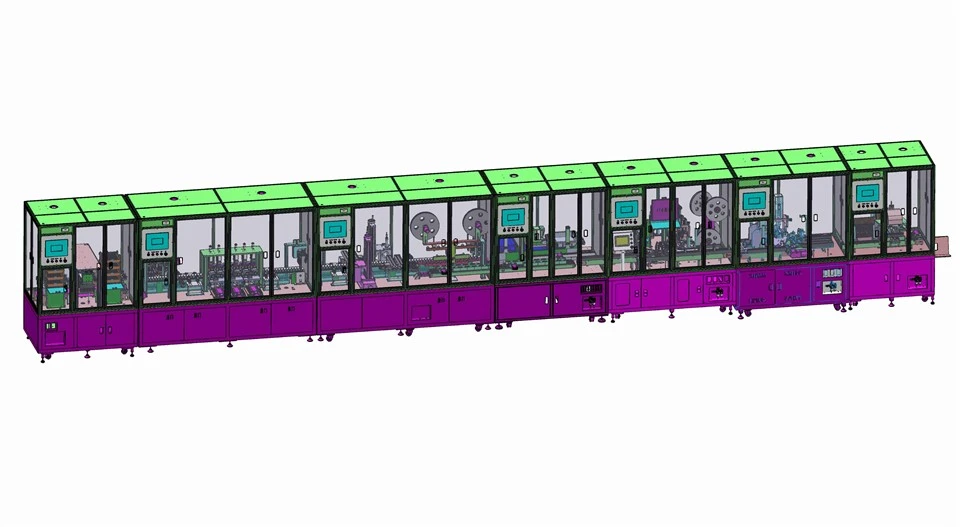
In a typical full - tab battery assembly line, the noise levels can vary significantly depending on the specific operation. Near the stamping stations, the noise levels can reach up to 90 - 95 dB. This is a relatively high level of noise, and prolonged exposure to such levels can cause hearing damage. The welding areas also have high noise levels, with laser welding generating around 85 - 90 dB and ultrasonic welding around 80 - 85 dB.
The conveyor belts and motor - operated parts generally produce noise levels in the range of 70 - 80 dB. While this is lower than the stamping and welding areas, continuous exposure to these levels can still be tiring for the workers.
It's important to note that these are average noise levels, and the actual levels can fluctuate depending on factors such as the speed of the assembly line, the type of battery being assembled, and the maintenance status of the equipment.
Impact of Noise on Workers
Excessive noise in the workplace can have several negative impacts on workers. The most obvious is the risk of hearing loss. Prolonged exposure to high - intensity noise can damage the hair cells in the inner ear, leading to permanent hearing impairment. This can have a significant impact on the workers' quality of life, both at work and outside of work.
In addition to hearing loss, high noise levels can also cause stress and fatigue. The constant exposure to loud noises can increase the workers' stress hormones, leading to increased blood pressure, heart rate, and anxiety. Fatigue can set in quickly, which can affect the workers' concentration and productivity.
Communication can also be severely hampered in a noisy environment. Workers may have difficulty hearing instructions from supervisors or communicating with their colleagues. This can lead to misunderstandings, errors, and potentially dangerous situations on the assembly line.
Noise Reduction Measures
As a responsible supplier, we are committed to providing solutions to reduce the noise levels of our full - tab battery assembly lines. One of the primary methods is the use of sound - absorbing materials. We line the enclosures of noisy components, such as stamping machines and welding stations, with sound - absorbing panels. These panels are designed to absorb and dampen the sound waves, reducing the noise levels in the surrounding area.
Vibration isolation is another important measure. We use vibration - isolating mounts for motors and pumps to reduce the transmission of vibrations to the surrounding structures. By minimizing vibrations, we can also reduce the noise generated by these components.
We also optimize the design of the assembly line to reduce noise. For example, we use smoother conveyor belts and more efficient motor designs to reduce friction and vibration. Additionally, we implement regular maintenance schedules to ensure that all components are in good working condition. Loose parts or worn - out components can increase noise levels, so proper maintenance is essential.
Compliance with Regulations
In many countries, there are strict regulations regarding workplace noise levels. These regulations are in place to protect the health and safety of workers. Our full - tab battery assembly lines are designed and manufactured to comply with these regulations. We conduct regular noise level tests during the production process to ensure that our equipment meets the required standards.
By providing a low - noise assembly line, we not only help our customers comply with regulations but also create a more comfortable and productive working environment for their employees.
Conclusion
The noise levels of a full - tab battery assembly line are influenced by various factors, including mechanical movement, stamping, welding, and the operation of motors and pumps. High noise levels can have a negative impact on workers' health and productivity. However, through the use of sound - absorbing materials, vibration isolation, and optimized design, we can effectively reduce the noise levels of our assembly lines.
If you are considering purchasing a full - tab battery assembly line, we encourage you to contact us for more information. Our team of experts can provide detailed specifications about the noise levels of our equipment and discuss the various noise reduction measures we have implemented. We are dedicated to providing high - quality, low - noise assembly lines that meet your production needs and comply with all relevant regulations.
References
- Occupational Safety and Health Administration (OSHA). Workplace Noise Exposure Standards.
- International Organization for Standardization (ISO). Standards for Noise Measurement in Industrial Environments.