

The number of battery caps a Battery Cap Welding Machine can weld in one batch is a crucial factor for battery manufacturers. It directly impacts production efficiency, cost - effectiveness, and overall output. As a supplier of Battery Cap Welding Machines, we understand the significance of this metric and are committed to providing machines that offer optimal batch - welding capabilities.
Factors Influencing Batch Welding Capacity
Machine Design and Configuration
The physical design of the Battery Cap Welding Machine plays a fundamental role in determining the maximum number of battery caps it can weld in one batch. Our machines are engineered with a modular design, which allows for flexible customization. For instance, the welding heads are arranged in a way that maximizes the use of available space on the worktable. A well - designed machine with a proper layout of welding heads can accommodate more battery caps at once.
The power supply of the machine is also a key aspect. A high - power welding machine can handle multiple welding operations simultaneously without overheating or losing welding quality. Our advanced power supply systems are designed to provide stable and sufficient energy for welding a large number of battery caps in one go.
Battery Cap Size and Type
Different battery caps come in various sizes and types, such as those used in cylindrical lithium - ion batteries, prismatic batteries, etc. Smaller battery caps generally allow for a larger number to be welded in one batch as they take up less space on the welding platform. For example, the caps of cylindrical lithium - ion batteries are relatively small and can be arranged in a compact pattern on the machine.
The material of the battery cap also affects the welding process. Some materials may require more energy or a specific welding technique, which can limit the number of caps that can be welded in one batch. Our Battery Cap Welding Machines are equipped with adjustable welding parameters to adapt to different cap materials and ensure high - quality welding.
Welding Technology
The welding technology employed by the machine has a significant impact on batch capacity. We use advanced resistance welding technology in our machines. This technology offers fast and efficient welding, which is suitable for high - volume production. Resistance welding works by passing an electric current through the battery cap and the battery body, generating heat at the contact point to form a weld.
Compared to other welding methods, resistance welding can complete the welding process quickly, allowing the machine to move on to the next set of battery caps in a short time. Additionally, our machines are equipped with intelligent control systems that can monitor and adjust the welding process in real - time, ensuring consistent welding quality across all the caps in a batch.
Maximum Batch Welding Capacity of Our Machines
Based on our extensive research and development, as well as practical experience in the field, our Battery Cap Welding Machines can achieve a relatively high maximum number of battery caps welded in one batch. For standard cylindrical lithium - ion battery caps, our machines can weld up to [X] caps in a single batch. This number can be further optimized through custom - made configurations according to the specific requirements of our customers.
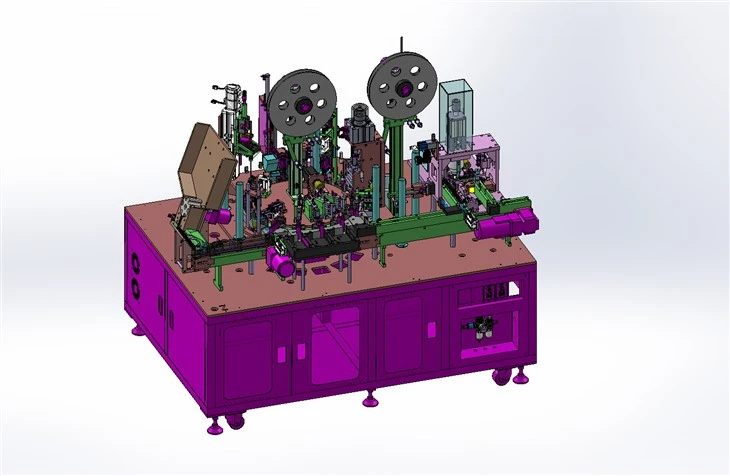
To give you a better understanding of the capabilities of our machines in the context of the overall battery manufacturing process, you can explore our Cylindrical Lithium - ion Battery Assembly Equipment. This equipment is designed to work in conjunction with our Battery Cap Welding Machines to provide a comprehensive solution for cylindrical lithium - ion battery production.

Real - World Applications and Benefits
In real - world battery manufacturing plants, the high batch - welding capacity of our machines brings numerous benefits. Firstly, it significantly improves production efficiency. With the ability to weld a large number of battery caps in one batch, manufacturers can reduce the time spent on loading and unloading the machine, as well as the overall production cycle time. This leads to higher output levels and faster delivery times for customers.
Secondly, it reduces production costs. By welding more caps in one batch, the energy consumption per cap is reduced, and the labor cost associated with operating the machine is also spread over a larger number of products. This makes the production process more cost - effective for battery manufacturers.
Our machines are also highly reliable, ensuring consistent welding quality across all the caps in a batch. This is crucial for maintaining the performance and safety of the final battery products. In addition to the Battery Cap Welding Machines, we also offer other related equipment such as Battery Sealing Machine and Bottom Welded Spotting Grooving Machine With Insulating Pad, which can be integrated into a complete battery production line.
Conclusion and Call to Action
The maximum number of battery caps that a Battery Cap Welding Machine can weld in one batch is determined by multiple factors, including machine design, battery cap characteristics, and welding technology. As a leading supplier of Battery Cap Welding Machines, we are dedicated to providing machines with high batch - welding capacity, excellent quality, and advanced features.
If you are a battery manufacturer looking to improve your production efficiency, reduce costs, and enhance the quality of your products, our Battery Cap Welding Machines are the ideal choice. We invite you to contact us for more information and to discuss your specific requirements. Our team of experts will be happy to assist you in finding the most suitable solution for your battery manufacturing needs.
References
- Battery Manufacturing Handbook: A Comprehensive Guide to Battery Production Processes, 20XX Edition
- Research Papers on Advanced Welding Technologies for Battery Components, Journal of Battery Manufacturing and Technology, 20XX - 20XX