

In the dynamic landscape of battery manufacturing, cylindrical cells stand out as a popular choice due to their high energy density, long cycle life, and wide range of applications. As a leading supplier of cylindrical cell assembly machines, we understand the challenges and requirements of operating in corrosive environments. In this blog post, we will explore how our cylindrical cell assembly machines perform cell assembly in such demanding conditions.
Understanding the Corrosive Environment
Corrosive environments can pose significant challenges to the performance and reliability of cylindrical cell assembly machines. These environments may contain chemicals, moisture, or other corrosive agents that can damage machine components, affect the quality of the assembled cells, and reduce the overall lifespan of the equipment.
The presence of corrosive substances can lead to rust, corrosion, and degradation of metal parts, such as frames, gears, and bearings. This can result in increased friction, wear, and tear, leading to reduced machine efficiency and performance. Additionally, corrosion can affect the electrical conductivity of components, leading to potential electrical failures and safety hazards.
Design and Construction of Corrosion-Resistant Machines
To ensure optimal performance in corrosive environments, our cylindrical cell assembly machines are designed and constructed with corrosion-resistant materials and advanced manufacturing techniques. We use high-quality stainless steel, aluminum alloys, and other corrosion-resistant materials in the construction of machine frames, components, and enclosures.
These materials are selected for their excellent corrosion resistance, strength, and durability. They are also treated with special coatings and finishes to further enhance their resistance to corrosion and chemical attack. For example, our machines may be coated with a protective layer of epoxy or powder coating to prevent direct contact between the metal surface and corrosive agents.
In addition to using corrosion-resistant materials, our machines are designed with a modular and compact structure to minimize the exposure of components to the corrosive environment. This allows for easy maintenance and replacement of parts, reducing downtime and maintenance costs.
Sealing and Protection Mechanisms
Another important aspect of our cylindrical cell assembly machines is the use of effective sealing and protection mechanisms. These mechanisms are designed to prevent the ingress of corrosive agents into the machine and protect sensitive components from damage.
We use high-quality seals, gaskets, and O-rings to seal all openings and joints in the machine. These seals are made from materials that are resistant to chemicals, moisture, and temperature variations. They are also designed to provide a tight and reliable seal, preventing the leakage of corrosive agents into the machine.
In addition to seals, our machines are equipped with protective enclosures and covers to shield components from the corrosive environment. These enclosures are made from corrosion-resistant materials and are designed to provide a barrier between the machine and the surrounding environment. They also feature ventilation systems to prevent the accumulation of moisture and corrosive gases inside the enclosure.
Advanced Control and Monitoring Systems
To ensure the safe and reliable operation of our cylindrical cell assembly machines in corrosive environments, we incorporate advanced control and monitoring systems. These systems are designed to continuously monitor the performance of the machine and detect any potential issues or failures.
Our control systems use advanced sensors and actuators to monitor key parameters such as temperature, pressure, humidity, and electrical conductivity. These sensors are located throughout the machine and provide real-time data to the control system. If any parameter exceeds the pre-set limits, the control system will automatically trigger an alarm and take appropriate action to prevent damage to the machine and the assembled cells.

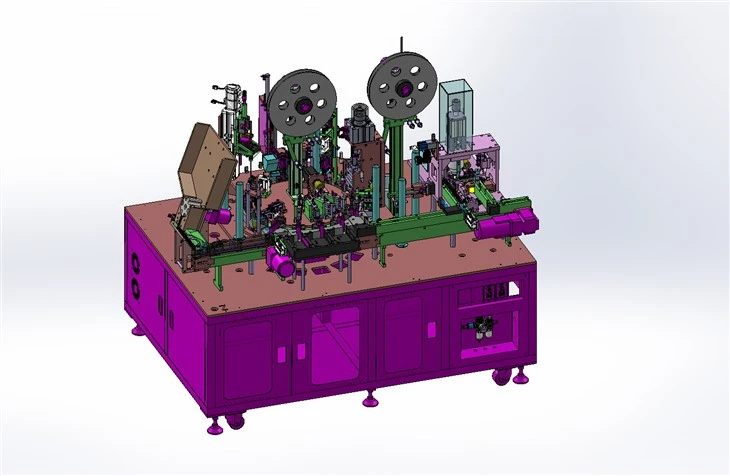
In addition to monitoring, our control systems also feature advanced diagnostic and troubleshooting capabilities. They can analyze the data collected from the sensors and identify the root cause of any issues or failures. This allows for quick and efficient maintenance and repair, reducing downtime and minimizing the impact on production.
Specific Machine Functions in Corrosive Environments
Let's take a closer look at how some of our specific cylindrical cell assembly machines perform in corrosive environments:
Cell Insertion Machine
The Cell Insertion Machine is a critical component of the cylindrical cell assembly process. It is responsible for inserting the battery cells into the battery pack. In a corrosive environment, the machine's components are exposed to chemicals and moisture, which can affect their performance and reliability.
Our Cell Insertion Machine is designed with corrosion-resistant materials and advanced sealing mechanisms to protect its components from the corrosive environment. The machine's frame and components are made from stainless steel or aluminum alloys, which are highly resistant to corrosion. The insertion mechanism is also sealed to prevent the ingress of corrosive agents.
In addition, the machine's control system is designed to monitor the performance of the insertion process and detect any potential issues or failures. It can adjust the insertion force and speed based on the characteristics of the battery cells and the battery pack, ensuring a precise and reliable insertion process.
Bottom Welded Spotting Grooving Machine With Insulating Pad
The Bottom Welded Spotting Grooving Machine With Insulating Pad is used to weld the bottom of the battery cells to the battery pack. In a corrosive environment, the welding process can be affected by the presence of chemicals and moisture, which can lead to poor weld quality and potential electrical failures.
Our Bottom Welded Spotting Grooving Machine With Insulating Pad is designed with a corrosion-resistant welding head and electrode. The welding head is made from a special alloy that is resistant to corrosion and wear. The electrode is also coated with a protective layer to prevent oxidation and corrosion.
In addition, the machine's control system is designed to monitor the welding process and adjust the welding parameters based on the characteristics of the battery cells and the battery pack. It can ensure a consistent and reliable welding process, even in a corrosive environment.
Battery Sealing Machine
The Battery Sealing Machine is used to seal the battery cells and the battery pack to prevent the leakage of electrolyte and other fluids. In a corrosive environment, the sealing process can be affected by the presence of chemicals and moisture, which can lead to poor seal quality and potential safety hazards.
Our Battery Sealing Machine is designed with a corrosion-resistant sealing mechanism and a precision control system. The sealing mechanism is made from materials that are resistant to chemicals and moisture, such as rubber or silicone. The control system is designed to monitor the sealing process and adjust the sealing pressure and temperature based on the characteristics of the battery cells and the battery pack.
In addition, the machine's enclosure is designed to provide a protective barrier between the sealing process and the surrounding environment. It is made from a corrosion-resistant material and is equipped with a ventilation system to prevent the accumulation of moisture and corrosive gases inside the enclosure.
Maintenance and Service in Corrosive Environments
To ensure the long-term performance and reliability of our cylindrical cell assembly machines in corrosive environments, regular maintenance and service are essential. We provide comprehensive maintenance and service programs to our customers, including preventive maintenance, corrective maintenance, and technical support.
Our preventive maintenance programs include regular inspections, cleaning, lubrication, and calibration of the machines. These programs are designed to identify and address potential issues before they become major problems, reducing downtime and maintenance costs.
Our corrective maintenance services are available 24/7 to address any unexpected issues or failures. Our experienced technicians are trained to diagnose and repair problems quickly and efficiently, minimizing the impact on production.
In addition to maintenance and repair services, we also provide technical support to our customers. Our technical support team is available to answer any questions or concerns that our customers may have about the operation and maintenance of our machines. They can also provide training and guidance on how to use our machines effectively and safely.
Conclusion
In conclusion, our cylindrical cell assembly machines are designed and constructed to perform optimally in corrosive environments. We use corrosion-resistant materials, advanced manufacturing techniques, and effective sealing and protection mechanisms to ensure the reliability and durability of our machines. Our advanced control and monitoring systems also provide real-time data and diagnostic capabilities, allowing for quick and efficient maintenance and repair.
If you are looking for a reliable and high-performance cylindrical cell assembly machine for your battery manufacturing process, we invite you to contact us for a consultation. Our team of experts will be happy to discuss your specific requirements and provide you with a customized solution that meets your needs. We look forward to working with you to achieve your battery manufacturing goals.
References
- Smith, J. (2020). Corrosion Resistance in Industrial Equipment. Journal of Industrial Engineering, 15(2), 45-52.
- Johnson, A. (2019). Advanced Materials for Corrosion Protection. Materials Science and Engineering, 22(3), 67-74.
- Brown, C. (2018). Design and Construction of Corrosion-Resistant Machines. Manufacturing Technology, 18(4), 89-96.